Science and Christianity Collection

$0.00

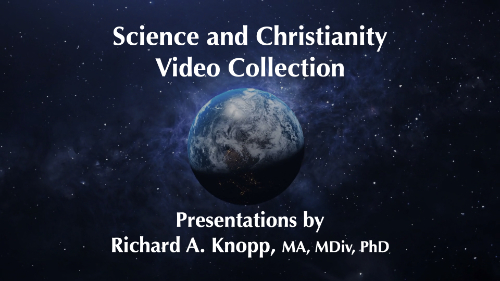
This FREE collection of video presentations provides a better understanding and appreciation of science and its connection to Christianity. It explores topics like the scientific revolution from Copernicus to Newton, Darwin’s idea of evolution and its subsequent impact, Einstein and relativity, the Big Bang, and the strange world of quantum physics. The presentations help bridge the gap between faith and science, especially for those who feel that science conflicts with religion or is irrelevant to it. The presentations were produced by Richard A. Knopp, an expert on the relationship between science and Christianity. They will help facilitate thoughtful reflection and informed discussions.

SKU: sku_science Category:

Description

Science and Christianity Video Collection

  • Why Do You Still Believe, Grandpa? (6:31 animation)
  • Perspectives on Science and Christianity. (12:47)
  • A Christian Approach to Science.  (52:10)
  • What Truth Can We Know About God? (6:25)
  • Truth About God in Nature. (6:23)
  • The Scientific Revolution, Part 1: Aristotle vs Copernicus. (48 min.)
  • The Scientific Revolution, Part 2: From Copernicus to Kepler to Galileo. (49 min.)
  • The Scientific Revolution, Part 3: From Galileo to Newton. (31 min.)
  • Darwinism: Its Development, Dominance, and Debates, Part 1. (49:17)
  • Darwinism: Its Development, Dominance, and Debates, Part 2. (51:00)
  • 20th-Century Physics and Its Impact, Part 1 (49:52)
  • 20th-Century Physics and Its Impact, Part 2. (50:40)
  • Postmodern Influences in Science. (52:16)

Who’s it for and how can it be used?

  • It can be used or adapted for Christian (and non-Christian) teens, parents, families, church classes, small groups, high school ministries, college ministries, Christian high schools, home schools, church leaders and teachers.
  • It’s ideal for self-study.
  • For example:
    • A high school or college student can use them while taking courses in biology, physics, or history.
    • Parents, grandparents, other family members, or friends can use them to facilitate valuable conversations.
    • A small group or church class can use them for thoughtful discussion.
    • A high school ministry can use them in a special study.
    • A home school can use them to supplement their instruction.

Just choose the presentations that seem to fit your situation the best.